The Beginner’s Guide to Reducing Food Waste
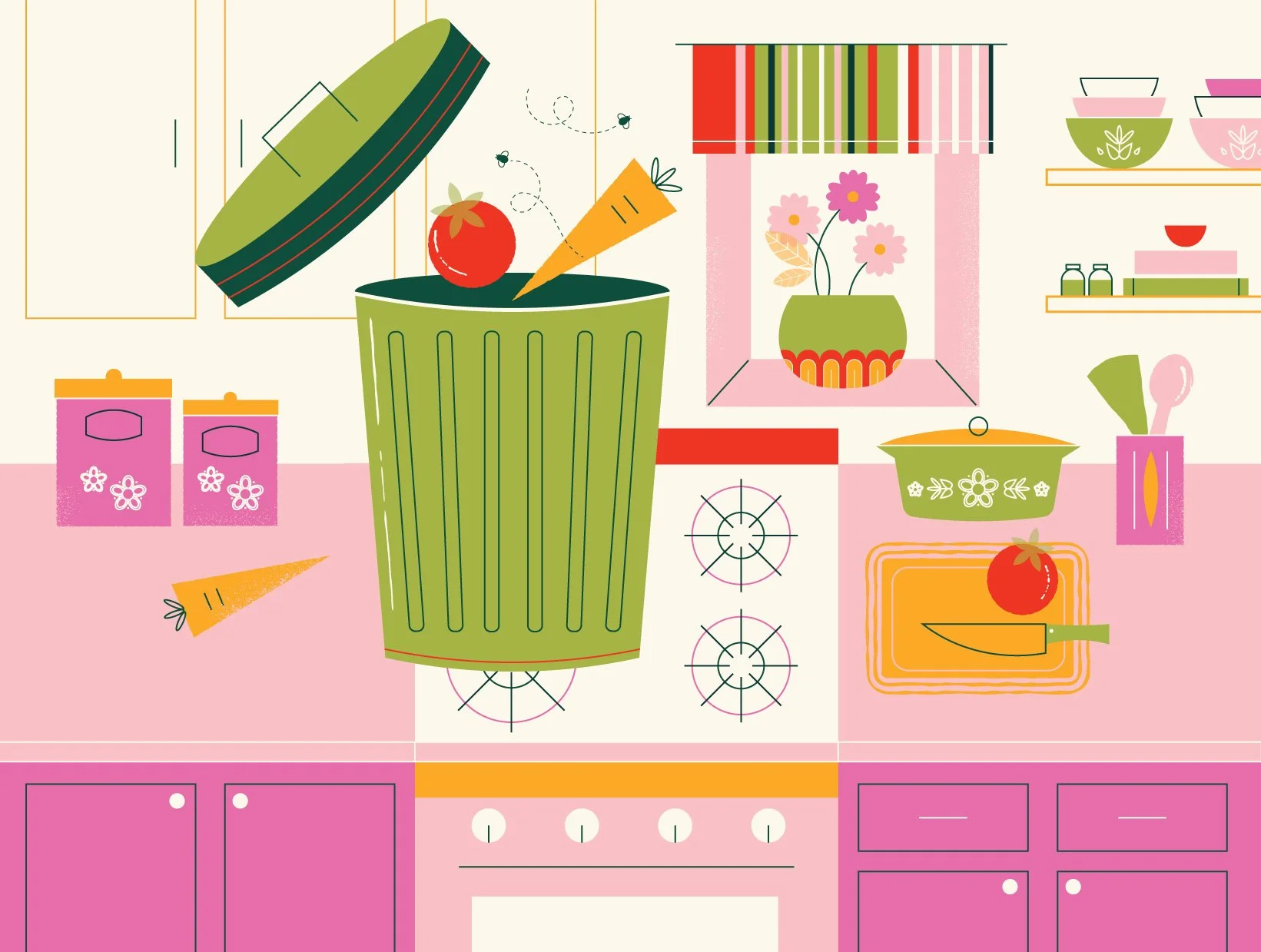
The illustration turns a cheerful kitchen scene into a quiet confrontation with the scale of food waste. At the center, a trash can sits where a pot might belong, its lid tipped open as fresh produce tumbles inside. A tomato and carrot hover midair, perfectly edible yet already discarded. Around them, the familiar comforts of home unfold: cabinets, bowls, a cutting board, a knife, flowers on the windowsill. Everything needed to make a meal is present, yet the food’s final destination is the bin.
The image echoes Dana Gunders’s analogy of an imaginary mega-farm whose enormous harvest never reaches a plate. What looks small and ordinary here mirrors something vast and costly beyond the kitchen: wasted water, wasted energy, wasted effort. By placing the problem squarely in a domestic setting, the illustration underscores Gunders’s point that while much food waste happens far upstream, nearly 40 percent occurs at home. Gunders notes that this is where everyday choices add up, and where small changes can begin to shrink a problem that is anything but small.
Client
STANFORD magazine
The Beginner’s Guide to Reducing Food Waste
Year
2022